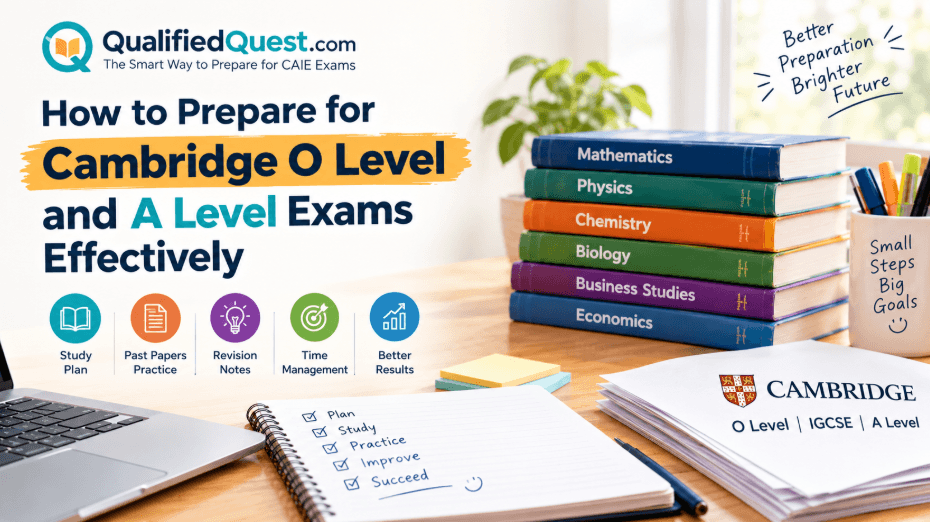
Cambridge O Level, IGCSE, and A Level exams require more than memorising textbooks. Students need a clear study plan, regular practice, and a good understanding of exam questions. With the right preparation strategy, students can improve their knowledge, manage exam stress, and perform better in their final examinations.
1. Create a Realistic Study Timetable
A well-planned timetable helps students manage their time effectively. Start by listing all subjects and identifying the topics that need more attention. Give extra study time to difficult subjects while keeping enough time for revision.
Set small daily goals instead of trying to complete too much in one session. For example, a student can revise one topic, practise a few questions, and review mistakes each day. Short breaks between study sessions can also help maintain concentration.
2. Use Cambridge Past Papers for Practice
One of the most useful ways to prepare for Cambridge examinations is to practise past papers. They help students understand question formats, common question styles, and the level of detail expected in their answers.
Students can find organised Cambridge past papers and revision notes on QualifiedQuest. The website provides free study materials for O Level, IGCSE, and AS & A Level subjects.
Practising past papers regularly helps students identify weak areas and become more familiar with exam requirements. Start by solving individual questions after studying a topic. Later, attempt complete papers under timed conditions to improve speed and time management.
3. Learn How to Use Mark Schemes
Completing a past paper is only part of the learning process. Students should also check their answers against the relevant mark scheme.
Mark schemes help learners understand how marks are awarded and what examiners expect in an answer. They can reveal common mistakes, missing keywords, and areas where an explanation needs improvement.
After checking a paper, write down incorrect answers and revise the related topics. Return to those questions after a few days and attempt them again without looking at the solutions.
4. Focus on Understanding Instead of Memorising
Memorisation can help with definitions, formulas, and important facts. Yet many Cambridge exam questions require students to apply their knowledge to unfamiliar situations.
For subjects like Mathematics, Physics, and Chemistry, practise applying formulas to different questions. In Business Studies and Economics, learn how to explain points and support answers with relevant examples. For Biology, connect important terms with processes and diagrams.
Understanding concepts makes it easier to answer questions that are worded differently from those in textbooks.
5. Make Short and Useful Revision Notes
Long notes can become difficult to review when exams are close. Instead, prepare short summaries of important concepts, formulas, definitions, and key examples.
Use headings, bullet points, diagrams, and tables to organise information. Keep notes focused on the syllabus and topics that need regular revision.
Students should review these notes throughout the academic year rather than waiting until the final weeks before exams.
See also: 7 Field Service Scheduling and Dispatch Problems That FSM Software Can Solve
6. Manage Exam Time and Stress
Time management is an important part of examination preparation. During practice sessions, follow the time allowed for each paper. Learn to move on when a question takes too long and return to it later if time permits.
Maintain a regular sleep schedule, eat balanced meals, and take short breaks during revision. Avoid comparing your progress with other students. Focus on improving your own performance and building confidence through consistent practice.
7. Track Progress and Improve Weak Areas
Keep a record of past paper scores and the topics where mistakes occur most often. This helps students see whether their preparation is improving.
If a particular topic remains difficult, revisit the textbook, review relevant notes, and practise additional questions. Ask a teacher for help when a concept is still unclear.
Regular progress checks make revision more focused and reduce the chance of repeating the same mistakes in the final examination.
Conclusion
Preparing for Cambridge O Level, IGCSE, and A Level exams becomes easier when students follow a consistent study routine. A realistic timetable, clear revision notes, regular past paper practice, and careful use of mark schemes can make a real difference.
Students looking for free and organised Cambridge study resources can visit QualifiedQuest.com to explore past papers and revision notes for different subjects. With steady effort and the right preparation methods, students can approach their examinations with greater confidence.