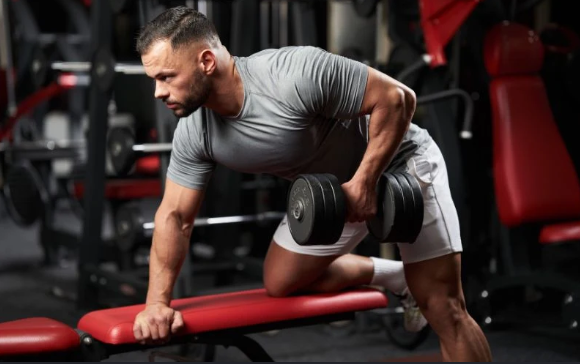
Starting a dumbbell workout routine is a simple way to build strength, improve fitness, and exercise at home or in the gym. Dumbbells can help you train your chest, back, shoulders, arms, legs, and core without needing a large collection of equipment.
However, beginners often make simple mistakes that can affect their progress. workouts that increase sweating ,Using dumbbells that are too heavy, rushing through repetitions, ignoring proper form, and skipping recovery can make workouts less effective.
A successful dumbbell workout is not about lifting the heaviest weight possible. It is about choosing appropriate resistance, learning good exercise technique, training consistently, and gradually increasing the challenge.
Why a Dumbbell Workout Routine Is Useful for Beginners
Dumbbells provide a convenient form of resistance training for both home workouts and gym sessions. A single pair of dumbbells can be used for many exercises that target different muscle groups.
Common dumbbell exercises include:
• Dumbbell squats
• Dumbbell lunges
• Dumbbell rows
• Dumbbell shoulder presses
• Dumbbell chest presses
• Dumbbell bicep curls
• Dumbbell tricep extensions
• Dumbbell deadlifts
These MTech Content fitness guides exercises can help beginners develop basic strength and become familiar with important resistance-training movements.
See also: How to Scale Your Business Without Burning Out
1. Choosing Dumbbells That Are Too Heavy
One of the most common dumbbell workout routine mistakes is starting with weights that are too heavy.
Some beginners believe that heavier dumbbells automatically produce better results. However, excessive weight can make it difficult to maintain proper form and complete the intended range of motion.
When a dumbbell is too heavy, you may start swinging your body, changing your posture, or using other muscles to complete the movement.
How to Avoid This Mistake
Start with a manageable weight that allows you to perform the exercise with good technique.
Focus on controlled repetitions instead of trying to lift the heaviest dumbbells available. As your strength and technique improve, you can gradually increase the resistance.
2. Ignoring Proper Dumbbell Exercise Form
Proper form is one of the most important parts of an effective dumbbell workout routine.
Poor exercise technique can change the way a movement is performed and may place unnecessary stress on your joints and muscles.
For example, during a dumbbell row, excessive twisting can reduce control. During a dumbbell squat, poor posture can make the movement less efficient.
Focus on maintaining stable posture, controlled repetitions, appropriate range of motion, proper alignment, and consistent breathing.
3. Using Momentum Instead of Muscle Control
Swinging dumbbells can make an exercise feel easier, but it often reduces control over the movement.
For example, someone performing dumbbell bicep curls may swing their upper body to move the weight. This can reduce the amount of work placed on the target muscles.
Instead, keep your movements controlled throughout the exercise. Pay attention to both the lifting and lowering phases rather than allowing the dumbbell to drop quickly.
4. Doing Too Many Exercises in One Workout
Another common mistake is trying to include every dumbbell exercise in one session.
A workout does not need dozens of movements to be effective. An overly complicated routine can make it harder to maintain good form and recover between workouts.
A simple full-body dumbbell workout can include exercises for your legs, chest, back, shoulders, arms, and core.
The goal is to create a routine that is manageable and consistent rather than unnecessarily complicated.
5. Training the Same Muscles Every Day
Beginners sometimes become highly motivated after starting a home dumbbell workout and want to train every day.
However, muscles also need time to recover after resistance training.
Instead of repeatedly training the same muscle groups without a plan, organize your workouts around your fitness level and goals.
Your dumbbell workout routine should balance exercise, recovery, and gradual progression.
6. Skipping the Warm-Up
Going directly from normal daily activities into a challenging dumbbell workout may not be the best way to begin.
A short warm-up can help prepare your body for exercise.
Before your main workout, spend several minutes performing light movements. You can also perform lighter warm-up sets before your working weight.
For example, before performing dumbbell shoulder presses, start with a lighter weight to practice the movement.
The purpose of a warm-up is to prepare for the workout rather than make you tired before it begins.
7. Neglecting Major Muscle Groups
Some beginners focus heavily on visible muscles such as the biceps and shoulders while ignoring their legs, back, and core.
This can result in an unbalanced workout routine.
Try to include exercises that train different major muscle groups throughout your training schedule.
| Muscle Group | Example Dumbbell Exercise |
| Chest | Dumbbell chest press |
| Back | One-arm dumbbell row |
| Shoulders | Dumbbell shoulder press |
| Biceps | Dumbbell curls |
| Triceps | Dumbbell extensions |
| Legs | Dumbbell squats |
| Glutes | Dumbbell lunges |
| Core | Dumbbell core exercises |
A balanced resistance-training program can help you develop strength across your body rather than focusing on only one area.
8. Focusing Only on Repetition Count
Beginners sometimes assume that completing more repetitions automatically means a better workout.
However, repetition count is only one part of resistance training.
Your dumbbell workout routine should also consider resistance, exercise selection, technique, training frequency, recovery, and progression.
Performing many rushed repetitions with poor form is not necessarily better than completing fewer controlled repetitions with appropriate resistance.
Focus on the quality of your repetitions instead of simply chasing a number.
9. Never Increasing the Training Challenge
Another problem occurs when someone follows exactly the same workout for months without making any changes.
Your body can adapt to repeated training. As exercises become easier, you may eventually need to increase the challenge.
This is where progressive overload can become useful.
Progression may involve gradually increasing your dumbbell weight, repetitions, sets, exercise difficulty, or movement quality.
You do not need to increase everything at once. Small changes can make your training more challenging over time.
10. Rushing Through Every Repetition
Speed can become another problem during beginner dumbbell workouts.
Fast repetitions can make it more difficult to maintain proper alignment and control. They can also encourage momentum to take over the movement.
Instead, practice deliberate repetitions.
Think about each movement from beginning to end. Set up correctly, lift the dumbbell under control, complete the movement, lower the weight carefully, and reset before the next repetition.
11. Forgetting to Breathe
Some beginners hold their breath during difficult sets.
Breathing should be part of your exercise technique. In many resistance exercises, beginners can generally inhale during the easier portion and exhale during the more demanding portion of the movement.
Avoid treating breathing as an afterthought.
If you are uncertain about breathing during a particular exercise, consider learning the movement from a qualified fitness professional.
12. Ignoring Exercise Range of Motion
Performing partial movements simply to complete more repetitions can reduce the quality of some exercises.
For example, maintaining an appropriate range of motion during dumbbell squats or curls can help you practice the intended movement.
However, range of motion should also match your mobility, exercise technique, and individual physical limitations.
Do not force a movement beyond a comfortable and appropriate range simply because another person performs the exercise differently.
13. Copying Advanced Workouts
Social media contains many challenging workout routines performed by experienced athletes and fitness enthusiasts.
Beginners may see an advanced dumbbell workout and immediately try to copy it.
This can create unnecessary difficulty.
Start with basic dumbbell exercises and learn fundamental movement patterns first. Once your technique and conditioning improve, you can gradually introduce more challenging variations.
A beginner workout does not need to look impressive. It needs to be manageable and repeatable.
14. Not Tracking Workout Progress
If you never record your workouts, it can be difficult to determine whether your training is improving.
Consider tracking your exercise name, dumbbell weight, sets, repetitions, workout date, and how difficult each exercise felt.
A simple workout journal can help you identify gradual improvements.
You do not need an advanced fitness app to track your progress. A notebook or basic spreadsheet can work well.
15. Ignoring Recovery and Rest
Training is only one part of a successful fitness routine.
Recovery also matters.
Give your muscles appropriate time between challenging workouts and pay attention to sleep, nutrition, hydration, and your overall activity level.
If your performance consistently decreases or you feel unusually fatigued, consider reviewing your training volume and recovery habits.
16. Forgetting Workout Safety
Dumbbells may look simple, but they are still resistance-training equipment.
Make sure you have enough space around you before starting a workout. Keep your footing stable and maintain a secure grip on the weights.
When picking up or putting down heavy dumbbells, use controlled movements rather than bending and twisting carelessly.
If you have an existing injury, medical condition, or concerns about starting a new exercise program, seek appropriate professional guidance before substantially increasing your physical activity.
How to Build a Better Dumbbell Workout Routine
Once you understand the common mistakes, building a simple workout routine becomes easier.
Start by selecting basic exercises that cover different movement patterns and major muscle groups.
A beginner-friendly session could include:
- Dumbbell squat
- Dumbbell chest press
- One-arm dumbbell row
- Dumbbell shoulder press
- Dumbbell Romanian deadlift
- Dumbbell bicep curl
You can adjust exercise selection according to your goals, available equipment, training experience, and physical needs.
The objective is not to create the most complicated workout possible. It is to create a routine that you can perform consistently with good technique.
Dumbbell Workout Routine Mistakes: Quick Checklist
Before each workout, ask yourself:
• Am I using an appropriate dumbbell weight?
• Can I maintain proper form?
• Am I controlling each repetition?
• Am I training different major muscle groups?
• Am I allowing enough recovery?
• Am I gradually progressing?
• Am I breathing normally?
• Do I have enough space to exercise safely?
• Am I tracking my workouts?
• Is this routine appropriate for my current fitness level?
These questions can help you identify common problems before they become habits.
Frequently Asked Questions
What is the biggest dumbbell workout mistake beginners make?
Using more weight than they can control is one of the most common mistakes. Beginners should prioritize proper form, controlled movement, and appropriate resistance before attempting heavier dumbbells.
How heavy should dumbbells be for beginners?
There is no single weight that works for everyone. Choose resistance that allows you to perform the exercise with controlled technique while making the final repetitions challenging.
Can beginners do a full-body dumbbell workout?
Yes. Dumbbells can be used for exercises targeting the chest, back, shoulders, arms, legs, and core. A simple full-body routine can provide effective resistance training without complicated equipment.
How often should beginners do dumbbell workouts?
Training frequency depends on your fitness level, goals, recovery, and overall exercise program. Beginners should focus on consistency while allowing sufficient recovery between challenging sessions.
Can dumbbell workouts build muscle?
Yes. Dumbbell resistance training can support muscle growth when the training provides an appropriate stimulus and is combined with adequate recovery and nutrition.
Should beginners lift heavy dumbbells?
Beginners should not choose weights simply because they are heavy. Start with manageable resistance and focus on learning the movement correctly. Increase the challenge gradually as your strength and technique improve.
Is a 30-minute dumbbell workout enough?
A 30-minute workout can provide useful resistance training when it is structured around appropriate exercises and performed consistently. Workout quality matters more than simply making the session longer.
Should I do dumbbell exercises every day?
Not necessarily. Your routine should allow appropriate recovery, particularly when repeatedly training the same muscle groups. More frequent training is not automatically more effective.
What exercises should beginners include in a dumbbell routine?
Beginners can start with basic movements such as squats, rows, presses, lunges, curls, extensions, and hip-hinge exercises. Exercise selection should match their experience, goals, and physical capabilities.
How can I progress my dumbbell workout routine?
You can gradually increase resistance, repetitions, sets, movement quality, or exercise difficulty. Make changes progressively instead of increasing every training variable at the same time.
Final Thoughts
A dumbbell workout routine can be an effective and convenient form of resistance training for beginners. The key is not to make every workout harder than the previous one.
Start with manageable weights, learn proper exercise technique, control your repetitions, train different muscle groups, allow adequate recovery, and gradually progress your training.
Avoiding common mistakes can make your home dumbbell workout more organized and sustainable. Most importantly, choose a routine that matches your current ability and that you can consistently follow over time.