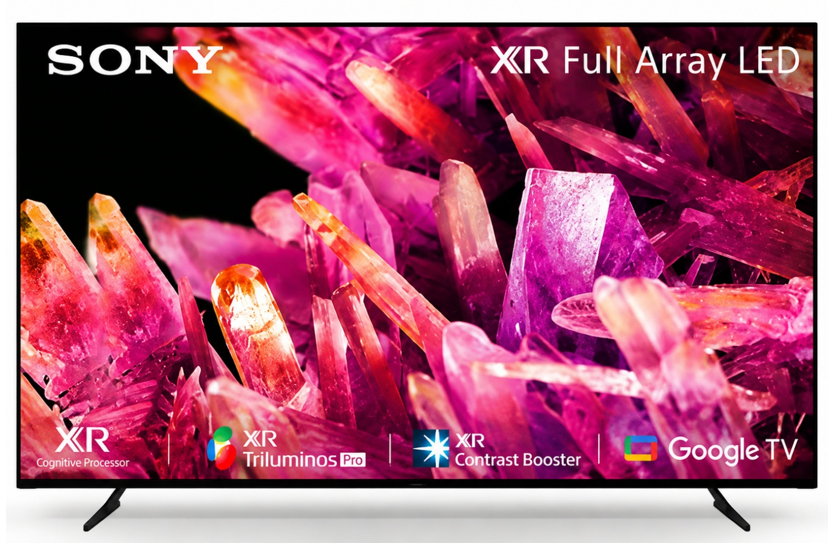
It can be very confusing comparing televisions from the same brand. That’s because two models sitting next to one another in a store may look essentially the same but perform very differently once on. Whether on the box or the price tag, these gaps aren’t usually explained in simple terms and come down to a few technical factors.
Knowing what those features do makes the difference between picking a model that happens to be on discount and selecting one that genuinely fits how a household watches TV. A few factors when choosing a Sony Smart TV, including the display panel, processor, and other components, affect picture quality, sound, and everyday ease of use more than screen size.
What Really Sets One Sony Model Apart From Another
Each Sony television shares the same basic idea. Accurate color rendition and smooth motion. However, the technology that brings this to fruition varies greatly. A television’s performance isn’t limited to its panel type and processing power; it also depends on the software.
What actually differentiates one model from another:
- The panel technology determines contrast and black levels
- Chips used in processing impact distribution and usage statistics
- Audio design varies widely across differently priced models
- The speed of smart platforms impacts daily usability
- Gaming features differ by model generation
Once you know the distinctions, comparison of models gets easier. A modern smart TV sporting strong processing and a good display can outperform a similarly priced device that merely relies on marketing to boost its screen size.
Key Features Worth Comparing
When comparing Sony televisions, a couple of features make the biggest difference.
Display Panel Type and Picture Quality
Sony offers both OLED and LED panels across its product line, and the panel type has the most notable impact on contrast and color fidelity. OLED models deliver deeper blacks, while LED and Mini LED alternatives provide increased peak brightness.
Panel differences worth understanding:
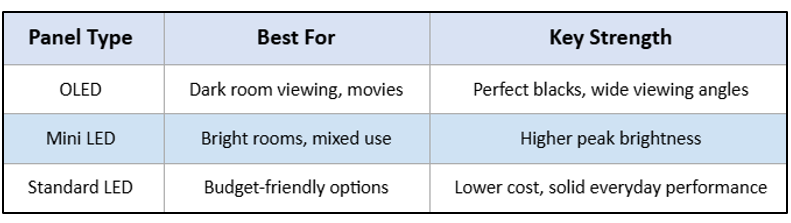
When choosing panel types, room lighting and whether you prefer brightness or contrast are often deciding factors.
Processing Technology and Image Enhancement
In real time, the Cognitive Processor XR in a Sony television analyses picture content, changing its focus, color, and contrast like a human eye. This computational power plays a significant role in upscaling lower-quality content.
What good processing actually enhances:
- Enhancing quality of outdated or lower-resolution content
- Motion smoothing for sports and fast action
- Uniform adjustment by prominent image-processing
- Color accuracy of the entire transmission
Weaker processors can make a good panel look flat, so the part matters more than many buyers think.
Audio Technology and Sound Quality
The sound is produced directly by the screen on select OLED models thanks to Sony’s Acoustic Surface Audio+ technology. It will sound like it comes from the action. Standard models rely on more conventional down- or back-firing speakers.
Different models have different audio features:
- OLED televisions contain speakers hidden inside the screen
- Transverse speakers on most mid-range models
- Certain larger screens now have subwoofers built-in
- The ability to connect with outside soundbars and home theater systems
Even if built-in audio has improved a lot, nothing beats a soundbar or TV speakers.
Smart Platform and Streaming Experience
Sony smart TVs run on Google TV, which brings together content from various streaming apps into a single search interface instead of requiring you to log in to each service separately. Platform speed differs between older and newer models.
What you should expect on the platform:
- A unified search feature across major streaming applications
- Customized suggestions according to your viewing history
- Voice command via integrated or external microphones
- Updated software for most recent model years
Earlier Sony models may be slower at this interface, so check the latest reviews for your model.
Gaming Performance and Connectivity
Gaming-oriented features have become a bigger point of differentiation across Sony’s lineup. The refresh rate and HDMI 2.1 support both affect how responsive gameplay feels.
Features that every gamer should check out:
- HDMI 2.1 ports for complete console compatibility
- Variable refresh rate can be used to lessen screen tearing
- Automatically minimizes latency to reduce any input lag
- Higher-end models have a 120Hz refresh rate
For console gaming, these features are important. We often miss out on certain features because we don’t check the spec sheet.
Practical Checks Before You Choose a Model
A series of final checks can help you confirm that your model genuinely fits how you’ll use it day to day, beyond what the specs say.
Here’s what to check:
- Compare the actual model number, not just the series name
- If gaming is crucial, inspect the number of HDMI 2.1 ports
- Look for unbiased reviews for an accurate picture of image quality
- Please verify the current software version and the update history
- Check that the available ports match the devices you already have at home
Going through this list won’t take more than a few minutes, but it is better to find out if a feature is missing before wall mounting the television.
Conclusion
When choosing a TV, focus on matching the features to the actual use. Don’t just look for models with the longest spec sheet.
Anyone comparing the wide range of Sony Smart TVs for sale at all price points today will realize that a measured, educated choice will always yield more reliable results than mere guesswork.