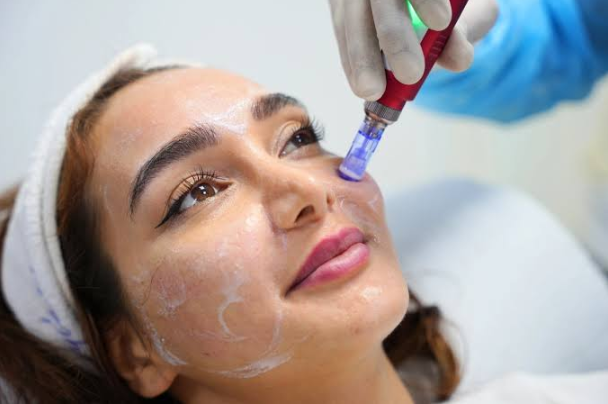
“Botox near me” is often typed late at night, usually right after a photo. A line between the brows that stayed put long after the frown went. The results load, the map fills with pins, and the decision gets made on two things. Distance and star rating. Fair enough as a first filter. Both are visible in about three seconds. What no pin tells you is who holds the prescription, what happens at the two-week review, or where you go if one side settles higher than the other.
Botulinum toxin is a prescription-only medicine in the UK. That single fact reshapes the entire search. It cannot be sold as a discount voucher, handed out at a party, or signed off from an online form. A qualified prescriber has to assess you face-to-face before any of it happens. So a search for “Botox near me” is really a search for a prescriber and an aftercare plan. The map shows neither of those.
West Wimbledon and the surrounding areas have no shortage of listings. Doctor-led medical clinics sit in the same results as salons with a visiting injector one afternoon a week. Nakedhealth is one of the West Wimbledon clinics providing botulinum toxin treatment alongside other medical aesthetic services. Nothing here recommends any specific provider. What follows are the checks that tell a regulated clinical setting apart from a booking with nowhere to go afterward.
Prescription-only status changes what a consultation is for
In many settings, the consultation has become a formality. Ten minutes, a price list, a card machine. That is not what it is supposed to be here. NHS guidance on choosing who will perform your cosmetic procedure sets out the position plainly. Botulinum toxin products are prescription-only medicines, and they can only be prescribed after a consultation between you and a healthcare professional such as a doctor or nurse. So the consultation is the legal gateway. Not a sales step. A clinic that offers to skip it or run it over the phone has told you something useful before you have spent anything.
The registers you can check in about four minutes
Anyone in the UK can currently describe themselves as an aesthetic practitioner. No statutory register covers non-surgical injectables yet. What exists instead is a mix of voluntary registers accredited by the Professional Standards Authority and the statutory registers that already cover medics.
Doctors appear on the General Medical Council register. Nurses appear on the Nursing and Midwifery Council register. The Joint Council for Cosmetic Practitioners and Save Face both publish lists of practitioners who meet set standards on training and insurance. In England, clinics carrying out regulated activities have to register with the Care Quality Commission, and CQC ratings sit online for anyone to read. That is four searches. None of them take long.
The prescriber and the injector may be two different people
This part catches people out. Whoever writes the prescription does not have to be the person holding the syringe. That arrangement is permitted. What is not permitted is a prescriber signing off without making sure the injector is trained and safe to carry it out. The responsibility stays with the prescriber either way.
So, the question at the consultation stage is short. Ask who prescribes and who injects. Then ask which of the two you reach if something shifts a week later.
What a proper consultation covers
NHS advice on the steps to take before you have a cosmetic procedure includes a cooling-off period near the middle. You should be offered time after the consultation to think, rather than a same-day discount that expires at six.
A practitioner should walk you through what the treatment involves and what the days afterward look like. Then the harder material. What can go wrong, and how long the effect tends to last before it fades. Costs belong in that conversation too, including aftercare and any repeat appointment, because the headline price and the annual price are rarely the same number.
Setups worth stepping back from
NHS advice names these directly. Group treatments, or events where alcohol is being served. Treatments sold through online voucher and group discount sites. Mobile services operate from private homes or hotel rooms. Practitioners who advertise only on social media.
Those four are not listed as rare edge cases. They sit in the standard public guidance, which suggests how often they come up. A clinic with a fixed address, a named prescriber, and a published complaints route removes most of the risk sitting behind them.
Aftercare is what “near me” should be measuring
Proximity usually gets filed under convenience. It carries more weight than that. Botulinum toxin takes several days to show any effect and roughly two weeks to settle, so a review appointment is part of the treatment rather than an optional extra.
If that review is a fifteen-minute walk away, you will go. If it means crossing London on a weekday, you will talk yourself out of it and live with an eyebrow sitting slightly wrong for three months. The clinic that is near you in any useful sense is the one you can get back to on a Tuesday lunchtime without having to rearrange your week.
See also: What a Cosmetic Dermatologist Does That a Treatment Menu Never Shows
Price is a signal, though not the one most people read
Low prices get read as a bargain. Sometimes they just mean volume and a short training course. High prices prove very little on their own. What the number should trigger is a question about what sits inside it.
Ask whether the consultation is charged separately. Ask whether the two-week review is included. Ask what happens, and what it costs, if an adjustment turns out to be needed. A clinic that answers those three without hedging is usually the same clinic that answered the register questions without hedging. That consistency is the thing a map pin will never show you.