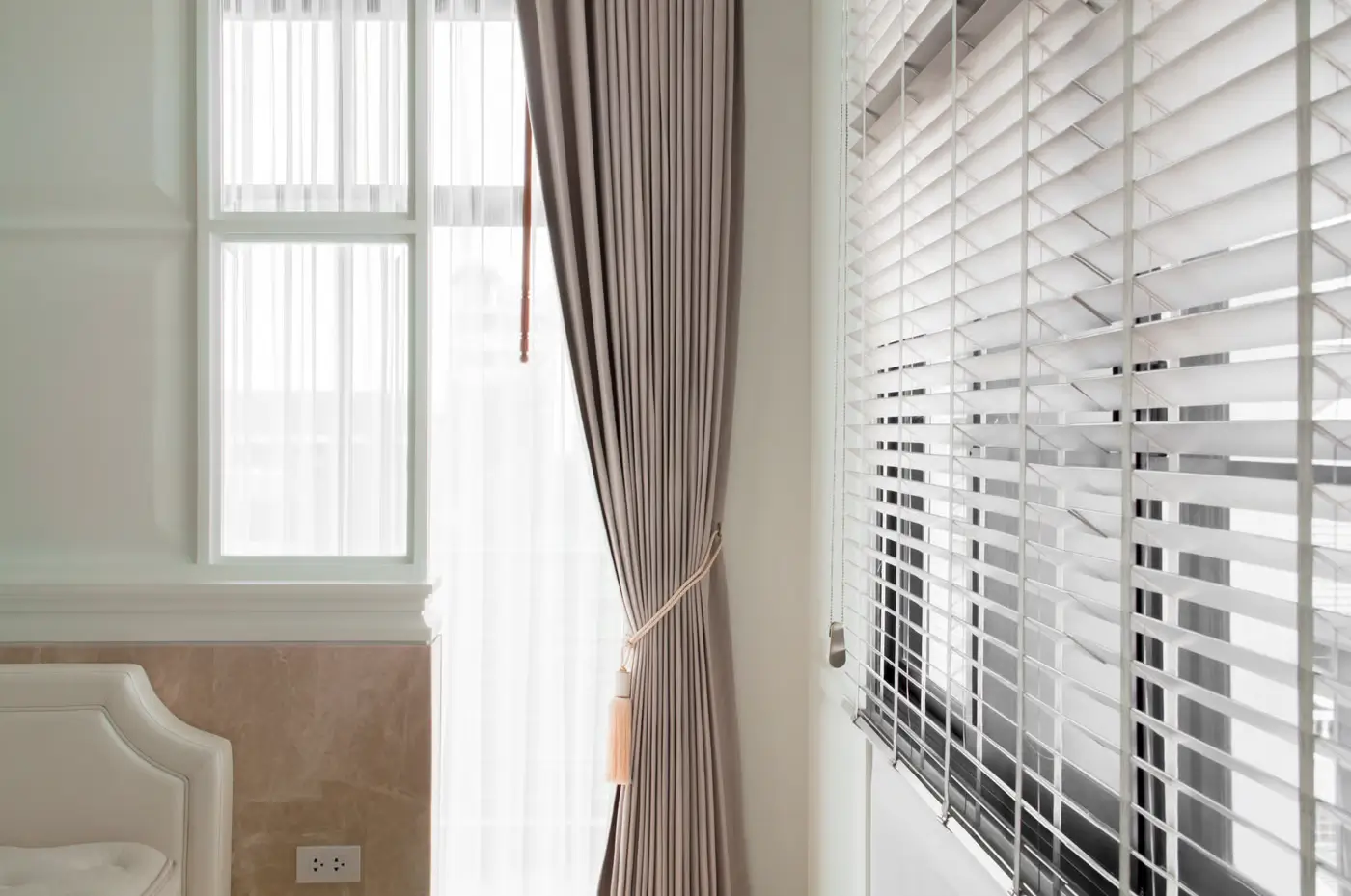
A homeowner in a west-facing flat pulls the curtains at 3pm to stop the glare, and the living room goes dim. By evening the room still feels shut in. That is a typical point to start comparing blinds.
Window blinds give homeowners finer control over daylight and privacy than a single layer of curtain fabric. Combi blinds alternate sheer and opaque panels, so one blind covers a bright afternoon and a private evening. Roller blinds filter or block light depending on the fabric, and Venetian blinds tilt their slats to angle the sun. The need is real in Singapore. The National Environment Agency says the UV Index commonly reaches Very High and Extreme levels between 11am and 3pm on days with little cloud. This article explains the benefits homeowners tend to notice after switching, and the rooms where curtains still do the job better. nea
What Do Window Blinds Do Differently From Curtains?
Curtains usually work as one layer of fabric that opens or closes. Blinds adjust in smaller steps. Combi blinds alternate sheer and opaque panels, roller blinds filter or block light depending on the fabric, and Venetian blinds tilt their slats to angle the light.
The window blinds Singapore homeowners can choose from fall into those three main types. Each suits a different job, so the right pick depends on the room.
| Everyday Need | Curtains | Blinds |
| Changing daylight through the day | Open, close or add a sheer layer | Panels or slats adjust in smaller steps |
| Privacy with light | Needs a sheer layer behind the curtain | Combi panels give both in one blind |
| Full darkness | Heavy or night curtains | Blackout roller fabric |
| Cords | Depends on the rail | Cordless models are available |
| Soft look and sound | Fabric softens a room and muffles sound | Blinds do less of both |
The table shows a trade-off. Blinds win on adjustment and tidy lines. Curtains win on softness and sound.
How Do Blinds Handle Light and Privacy Through the Day?
Blinds handle light in steps. Combi blinds alternate sheer and opaque panels, so a homeowner can keep daylight and privacy at noon and close the opaque panels at night. Roller blinds in blackout fabric block light for sleep. Venetian blinds tilt slats to angle sun away from a sofa or screen.
At night, closed panels or a lowered blackout roller also stop neighbours in nearby blocks from seeing in.
Korean Combi Blinds are built around this idea. The panels alternate, so a homeowner slides between soft daylight with privacy and a darker room without changing the blind. They run smoothly and quietly, and each one is custom-fitted to the window.
Roller blinds take a different approach. The homeowner picks one fabric, from light-filtering to blackout, and the blind does that one job well. The clean, simple design also suits most decor.
Are Blinds Easier to Live With Day to Day?
Many blinds are simple to operate and maintain. Roller blinds have a clean design that is easy to maintain, and combi blinds run smoothly and quietly. Cordless models have no pull cord, which suits homes with young children and pets.
Cord safety deserves a closer look in family homes. A cordless blind is operated by lifting or a push-and-pull motion, so nothing hangs within a child’s reach. Not every blind is cordless, so a homeowner who wants that feature should confirm it before ordering.
Upkeep still takes effort. Every blind needs regular dusting, and care instructions vary by material, so the maker’s guidance comes first.
Do Blinds Work in Kitchens and Bathrooms?
Yes, if the material suits damp air. Waterproof PVC Venetian blinds are made for kitchens and bathrooms, where steam and splashes reach the window. Fabric blinds generally suit drier rooms such as living rooms and studies.
Singapore’s climate stays humid all year, so material choice matters. Rooms near water also benefit from a material that can be wiped clean, since steam and splashes leave marks.
Which Rooms Gain the Most From Blinds?
Blinds gain the most in rooms where daylight changes through the day, where glare is a problem, or where moisture reaches the window. Bedrooms are the room where the choice is closest.
- Living room: combi or roller blinds adjust to changing daylight.
- Study or home office: light-filtering or blackout roller fabric controls glare.
- Kitchen and bathroom: waterproof PVC Venetian blinds handle steam and splashes.
- Bedroom: blackout roller blinds block light, though curtains also suit this room.
See also: Time-Sensitive Penetration Testing for Businesses
Why Do Window Coverings Matter for Sleep and Comfort?
Window coverings control when daylight enters a room, so they affect sleep, glare and privacy. Roller blinds in blackout fabric suit bedrooms where early sun wakes sleepers. Light-filtering fabrics suit rooms that need daylight without glare. Matching the covering to the room matters more than choosing blinds or curtains.
Sleep is the part many homeowners overlook. A sleep researcher at the NUS Yong Loo Lin School of Medicine says adults should sleep at least seven hours a night, yet 60 to 75 per cent miss that on weekdays. That is roughly two in every three adults.
A window covering cannot fix a late night. It can remove one early waker, which is sunrise through an uncovered window.
When Do Curtains Still Make More Sense?
Curtains make more sense in rooms where fabric adds softness and where complete darkness matters most, such as bedrooms. Heavy fabric also muffles sound better than most blinds. A mix works well: blinds in the living room, kitchen and study, and curtains in the bedrooms.
Blinds are not better everywhere. They do less to soften a room and less to cut noise. A homeowner who wants those two things should keep the curtains.
How Should a Homeowner Plan the Switch?
Start by measuring the window frame, not the old curtain, since a curtain often covers more than the window. Take the width and drop at more than one point, because frames are rarely perfectly square. Custom blinds are cut to those numbers, so accurate measurements matter more than the style chosen.
Flat owners should also read the renovation rules. HDB regulates the types of renovation carried out in its flats, and some need a permit while others do not. Checking the guidelines for the specific flat before any work starts avoids problems.
Comparing blinds Singapore suppliers offer in combi, roller and Venetian styles is easier once the window sizes are written down. A homeowner can then ask each supplier to quote from the same numbers and compare quotes on the same basis. Ordering one room first also lets a homeowner judge the look and operation before switching the rest.
Switching from curtains to blinds is usually a room-by-room decision. Rooms that need changing daylight, easy upkeep or damp-proof material favour blinds. Rooms that need softness and full darkness often keep their curtains. Matching the covering to the room gives the best result.