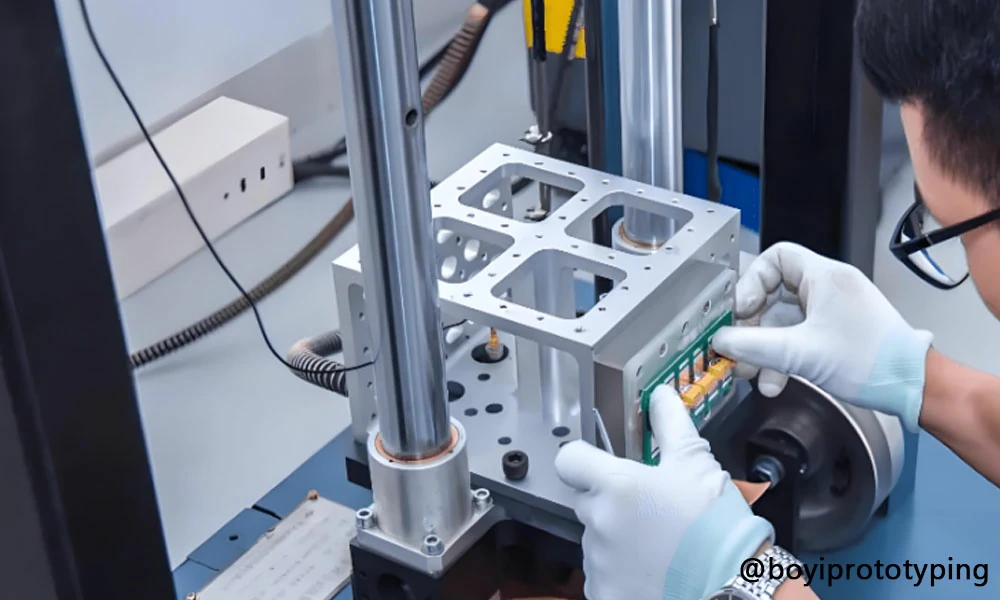
In modern engineering, understanding how materials behave under real-world conditions is no longer optional—it is essential. Whether designing a high-rise building, manufacturing automotive components, or developing next-generation aerospace systems, engineers depend on accurate data to make informed decisions. This is where Mechanical Testing plays a central role.
At its core, Mechanical Testing is about uncovering the truth behind a material’s performance. It goes beyond theoretical assumptions and reveals how a material reacts when subjected to forces, pressure, temperature, and time. While traditional testing methods focused mainly on basic properties like strength and elasticity, today’s engineering challenges demand a deeper, more nuanced understanding.
This article explores how Mechanical Testing has evolved to break traditional limits, offering a more complete picture of material performance. By examining modern techniques, real-world applications, and emerging trends, we can better understand why Mechanical Testing remains one of the most critical tools in engineering today.
Understanding the Purpose of Mechanical Testing
Mechanical Testing is designed to evaluate how materials respond to different types of loads and environmental conditions. It provides measurable data that helps engineers determine whether a material is suitable for a specific application.
Historically, Mechanical Testing focused on fundamental properties such as tensile strength, compressive strength, and hardness. These metrics remain important, but they only tell part of the story. In real-world applications, materials rarely experience simple, uniform forces. Instead, they are subjected to complex combinations of stresses that change over time.
The true purpose of Mechanical Testing today is not just to measure strength but to understand behavior. Engineers want to know how materials deform, how they fail, and how they perform over extended periods. This shift from basic measurement to comprehensive analysis is what allows Mechanical Testing to reveal true material performance.
Moving Beyond Basic Strength Measurements
Traditional Mechanical Testing methods often rely on controlled laboratory conditions. While these conditions provide consistency, they may not accurately represent real-world environments.
Modern Mechanical Testing addresses this gap by incorporating more realistic scenarios. Instead of applying a single load until failure, engineers now simulate dynamic conditions such as repeated stress cycles, fluctuating temperatures, and environmental exposure.
Fatigue testing is a clear example of this evolution. Rather than focusing on immediate strength, it examines how materials behave under repeated loading. A material that appears strong in a single test may fail after thousands of cycles, making fatigue testing essential for applications like bridges and aircraft.
Similarly, creep testing evaluates how materials deform over time under constant stress. This type of Mechanical Testing is particularly important in high-temperature environments, where long-term stability is critical.
By expanding beyond basic strength measurements, Mechanical Testing provides a more realistic and reliable understanding of material performance.
The Role of Microstructure in Material Behavior
One of the most significant advancements in Mechanical Testing is the recognition of microstructural influence. Materials are not uniform at the microscopic level, and their internal structure can significantly affect their performance.
Modern Mechanical Testing techniques allow engineers to study how micro-level features influence macro-level behavior. Small defects, grain boundaries, and phase distributions can all impact strength, durability, and failure modes.
For example, two materials with similar chemical compositions may perform very differently due to variations in their microstructure. Mechanical Testing helps identify these differences, enabling engineers to refine manufacturing processes and improve material quality.
This deeper level of analysis is particularly important for advanced materials, where performance depends on precise structural characteristics.
Integrating Digital Technologies into Mechanical Testing
The integration of digital technologies has transformed Mechanical Testing into a more precise and data-driven process. Advanced sensors and data acquisition systems provide real-time insights into how materials respond during testing.
Techniques such as digital image correlation allow engineers to measure strain distribution across a material’s surface with high accuracy. This reveals localized weaknesses that might not be detected through traditional methods.
Simulation tools also play a key role in modern Mechanical Testing. Engineers can create virtual models to predict how materials will behave under different conditions. These simulations complement physical testing by reducing the need for extensive experimentation and enabling faster development cycles.
Data analytics and machine learning are further enhancing Mechanical Testing by identifying patterns and predicting failure modes. This combination of physical testing and digital analysis represents a significant step forward in understanding material performance.
Real-World Applications of Mechanical Testing
Mechanical Testing is deeply embedded in nearly every engineering discipline. Its importance becomes especially clear when examining real-world applications.
In the automotive industry, Mechanical Testing ensures that components can withstand the stresses of daily use while maintaining safety and efficiency. Engineers rely on testing data to design lighter vehicles without compromising structural integrity.
In aerospace engineering, Mechanical Testing is critical for ensuring reliability under extreme conditions. Aircraft components must endure high loads, temperature variations, and long service lifespans. Testing helps identify potential weaknesses before they lead to failure.
The construction industry also depends heavily on Mechanical Testing. Buildings, bridges, and infrastructure projects require materials that can withstand environmental factors and long-term wear. Testing provides the data needed to ensure durability and safety.
Even in emerging fields such as renewable energy, Mechanical Testing plays a vital role. Wind turbines, for instance, operate under constant mechanical stress and environmental exposure. Accurate testing ensures that these systems remain efficient and reliable over time.
Challenges in Modern Mechanical Testing
Despite its advancements, Mechanical Testing faces several challenges in today’s engineering landscape. One of the primary difficulties is accurately replicating real-world conditions in a controlled environment.
Materials often behave differently outside the laboratory, where factors such as temperature fluctuations, humidity, and unexpected loads come into play. Bridging this gap remains a key focus for researchers and engineers.
Another challenge is the increasing complexity of materials. Advanced composites, smart materials, and nanomaterials require specialized testing methods that go beyond traditional approaches. Developing these methods while maintaining accuracy and consistency is an ongoing effort.
There is also the issue of time and cost. Comprehensive Mechanical Testing can be resource-intensive, especially when evaluating long-term performance. Engineers must balance the need for detailed data with practical constraints.
The Future of Mechanical Testing
The future of Mechanical Testing lies in its ability to adapt to evolving engineering demands. As materials become more advanced and applications more complex, testing methods must continue to innovate.
One promising direction is the use of real-time monitoring systems. Instead of relying solely on pre-deployment testing, engineers can continuously monitor materials during actual use. This approach provides valuable data on how materials perform in real-world conditions.
Automation is another area of growth. Automated testing systems can perform repetitive tasks with high precision, reducing human error and increasing efficiency.
Sustainability is also becoming a key consideration. Engineers are exploring ways to make Mechanical Testing more environmentally friendly by reducing waste and energy consumption.
These advancements suggest that Mechanical Testing will continue to evolve, offering even deeper insights into material performance.
Frequently Asked Questions (FAQ)
What is Mechanical Testing?
Mechanical Testing is the process of evaluating how materials respond to applied forces, stress, and environmental conditions. It helps determine properties such as strength, flexibility, and durability.
Why is Mechanical Testing important?
Mechanical Testing ensures that materials and components can perform safely and effectively in their intended applications. It is essential for quality control, safety assurance, and product development.
What are the common types of Mechanical Testing?
Common types include tensile testing, compression testing, fatigue testing, hardness testing, and impact testing. Each type provides different insights into material behavior.
How does Mechanical Testing reveal true material performance?
Mechanical Testing reveals true material performance by simulating real-world conditions and analyzing how materials behave under various stresses over time. This provides a more accurate understanding than theoretical models alone.
Can Mechanical Testing predict material failure?
While Mechanical Testing cannot predict every possible failure, it can identify likely failure modes and help engineers design materials and structures to minimize risk.
How is technology improving Mechanical Testing?
Technology enhances Mechanical Testing through advanced sensors, data analytics, simulation tools, and automation. These innovations provide more precise and comprehensive insights.
Which industries rely on Mechanical Testing?
Industries such as automotive, aerospace, construction, manufacturing, and energy all depend on Mechanical Testing to ensure safety and performance.
Conclusion
Mechanical Testing has evolved far beyond its traditional role of measuring basic material properties. Today, it serves as a powerful tool for uncovering the true behavior of materials under real-world conditions. By integrating advanced techniques, digital technologies, and a deeper understanding of material science, Mechanical Testing enables engineers to push the boundaries of innovation.
As engineering challenges continue to grow in complexity, the importance of Mechanical Testing will only increase. It provides the insights needed to design safer structures, develop more efficient products, and ensure long-term reliability.
Ultimately, breaking the limits of Mechanical Testing is about gaining a clearer, more complete understanding of materials. This knowledge not only drives technological progress but also builds the foundation for a safer and more resilient future.