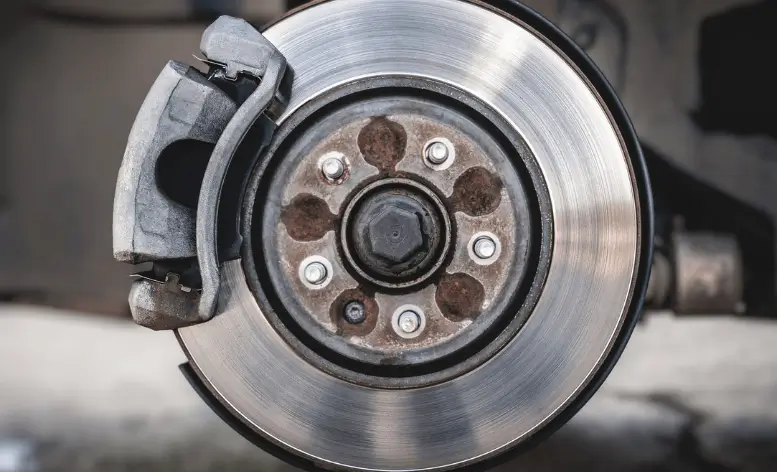
Most drivers don’t think about their brake pads until something goes wrong. The pedal feels strange, a noise starts up every time you slow down, and suddenly you’re wondering how long you’ve been driving on borrowed time.
Brake pads are one of the few car parts designed to wear out. Every time you press the pedal, the pads press against the rotors and lose a tiny bit of material. That’s normal. What matters is catching the wear before it turns into a safety problem or an expensive repair.
Here are seven warning signs that your brake pads need replacing, and what each one is telling you.
1. A High-Pitched Squealing Noise
This is usually the first sign. Many brake pads have a small metal tab built in, called a wear indicator. When the pad material gets thin, the tab touches the rotor and produces a sharp squeal on purpose, as a warning to you.
If the sound shows up when you brake lightly and goes away when you press harder, take it seriously. It’s your car asking for new pads.
One note: a brief squeak on a damp morning or after rain can be harmless surface rust on the rotors. If the noise stays after a few stops, though, get the pads checked.
2. A Grinding or Growling Sound
Squealing is a polite warning. Grinding is the loud one.
If you hear a harsh metallic grinding when you brake, the pad material may be completely gone. That means the metal backing plate is rubbing directly against the rotor. It damages the rotor quickly, and a job that could have been just new pads can become pads plus new rotors.
If you hear grinding, stop driving the car as much as possible and book an inspection right away.
3. A Longer Stopping Distance
Do you feel like you need to press harder or start braking earlier than you used to? Worn pads have less material to grip the rotor, so the car takes longer to stop.
This change often happens gradually, which makes it easy to miss. A good habit is to notice how the car responds in everyday traffic. If a stop you’ve made a hundred times suddenly feels less confident, don’t brush it off. In heavy city traffic or on a wet expressway, those extra metres can matter a great deal.
4. A Vibrating or Pulsating Brake Pedal
If the pedal shakes under your foot, or the steering wheel trembles when you brake, something in the braking system isn’t right. This is often linked to uneven or warped rotors, which can be caused by overheated or badly worn pads.
It doesn’t always mean the pads are the only problem, but it’s a sign the whole braking system needs a proper inspection, and new pads are often part of the fix.
5. The Car Pulls to One Side
When you brake and the car drifts left or right, the pads on one side are probably wearing unevenly or a caliper is sticking. The brakes aren’t working equally on both wheels, which is a stability risk, especially in an emergency stop.
Don’t wait on this one. Uneven braking can get worse quickly.
6. The Brake Warning Light Comes On
Some cars have a dashboard warning that tells you when the pads are worn, and others have a general brake system light. Either one deserves attention.
It’s easy to ignore a dashboard light when the car still seems to be driving normally. But brakes are not something to gamble on. If a brake warning light appears, have the system checked as soon as you can.
7. The Pads Look Thin When You Inspect Them
You don’t need to be a mechanic to take a quick look. On many cars, you can see the brake pad through the gaps in the wheel spokes. A healthy pad has a solid layer of friction material. As a general rule of thumb, if the pad looks around 3 mm thick or thinner, it’s time to replace it.
You might also notice a lot of dark brake dust on your wheels, or visible scoring on the rotor surface. Both can hint at heavy wear. If you’re not sure what you’re looking at, a workshop can measure the pad properly in a few minutes.
How Long Do Brake Pads Usually Last?
There’s no single number. Pad life depends on how you drive, where you drive, and what the pads are made of. Stop-and-go traffic, hilly roads, heavy loads, and aggressive braking all wear pads faster than steady highway driving.
Instead of counting kilometres, it’s smarter to have the pads inspected during every regular service and replace them when they reach their wear limit.
What to Do When You Spot the Signs
- Get them inspected soon. Don’t wait for the next scheduled service if you hear grinding or notice pulling.
- Replace pads in pairs. Always change both front pads or both rear pads together, so braking stays even.
- Check the rotors. If they’re scored or warped, they may need resurfacing or replacing.
- Choose quality pads. Brakes are not the place to save a few ringgits. Look for pads with clear specifications that match your car’s make, model, and year. If you’re comparing options, you can browse Ignito brake pads and filter by your vehicle.
- Have them fitted properly. A good pad installed badly can still cause problems, so use a qualified mechanic.
Final Thoughts
Your brakes usually give you plenty of warning before they fail: a squeal, a grind, a soft pedal, a pull to one side. The trick is listening, and acting early. Replacing worn pads promptly is far cheaper than repairing damaged rotors, and it keeps you and your passengers safer on the road.
If your car is showing any of these signs, don’t put it off. And if you’re ready to replace them, explore the full brake system range at Ignito Parts to find parts that fit your car.